
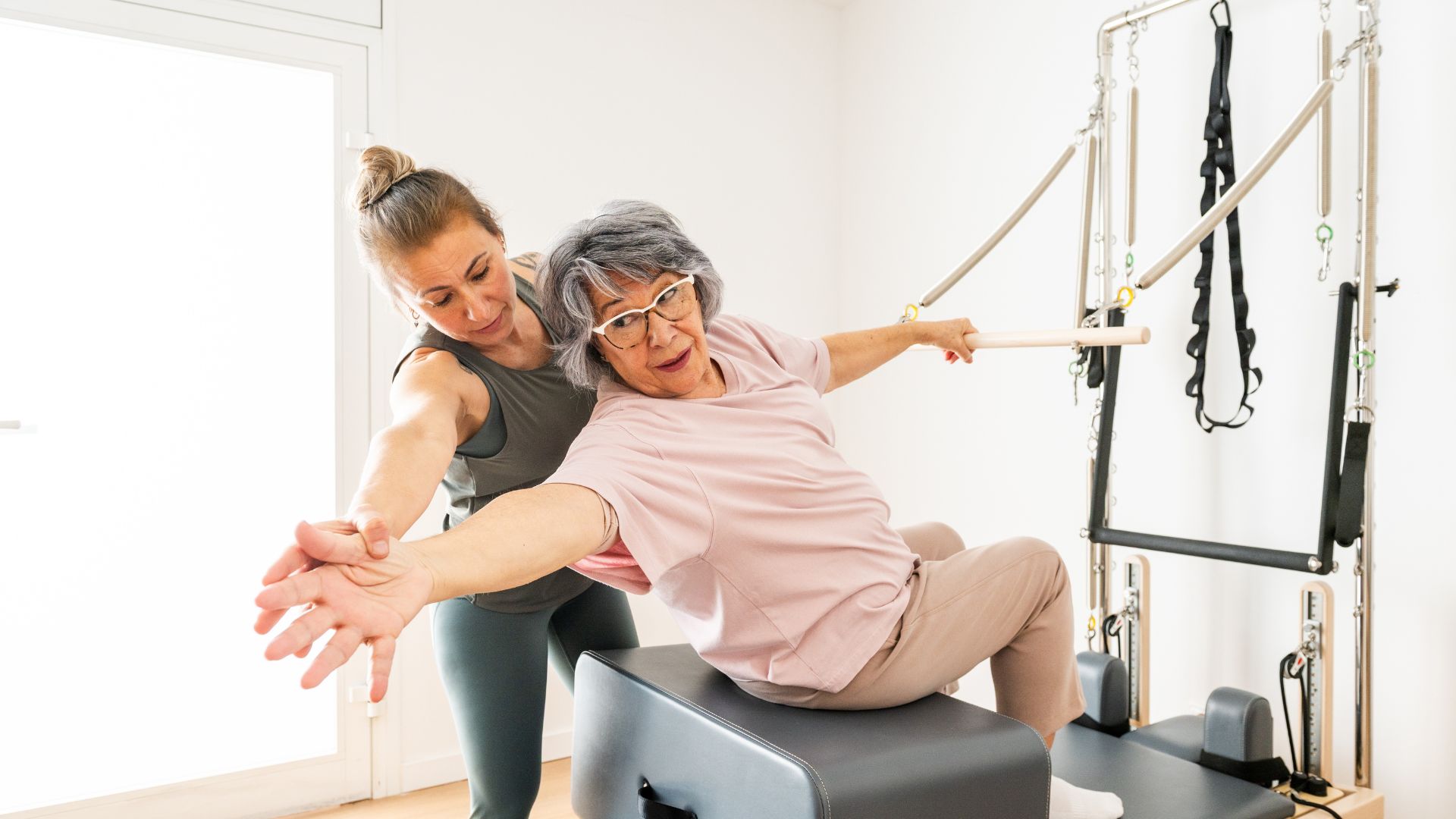
Most daily activities require us to move while thinking, planning, or reacting to our surroundings, all at the same time. Whether it’s carrying groceries while navigating stairs, turning to respond in conversation, or walking through a busy environment, the brain must constantly manage both physical movement and mental tasks.
Dual task training mimics real-world situations in a way that prepares the body and the brain to work together to take on the challenges of complex daily tasks. In this article, we examine dual task training, who can benefit from this type of rehabilitation, how it is used in a therapeutic setting and how it translates into safer mobility at home and in the community.
Table of Contents:
- What is dual task training?
- Why traditional balance training isn’t always enough?
- Who benefits from dual task training?
- Therapeutic approach to dual task training
- Bringing balance training into the real world
What Is Dual Task Training?
For many individuals—especially those recovering from neurological injury or experiencing age-related changes—this combination of thinking and moving can make maintaining balance more challenging in real-world situations.
In rehabilitation, this phenomenon is referred to as cognitive-motor interference—where the performance of movement declines when attention is shared between thinking and doing. Research has consistently shown that dual tasking negatively impacts gait speed, stride length, and postural stability in both healthy individuals, particularly older adults and those with neurological conditions.[i]
Dual task training is a rehabilitation approach that challenges a person to perform a physical task and a cognitive task at the same time.
This might include:
- Walking while counting backwards
- Standing on an uneven surface while naming words in a category
- Carrying an object while turning
- Stepping over obstacles while responding to questions
These exercises are designed to reflect real-world demands, where the brain must constantly shift attention between thinking and moving safely through the environment.
Why Traditional Balance Training Isn’t Always Enough?
Balance in everyday life involves much more than simply standing or walking. Conventional balance exercises—such as standing on one leg or walking in a straight line—are important starting points for improving strength and postural control. However, falls rarely occur when someone is standing still and concentrating only on their balance.
More often, they happen when attention is divided—when a person is distracted, multitasking, or navigating a busy or unfamiliar space. Evidence suggests that cognitive-motor dual task training is more effective than traditional fall-prevention interventions at improving gait, static and dynamic balance, and executive function in older adults living in the community.[ii]
Who Benefits from Dual Task Training?
Dual task training can be especially helpful for individuals who are:
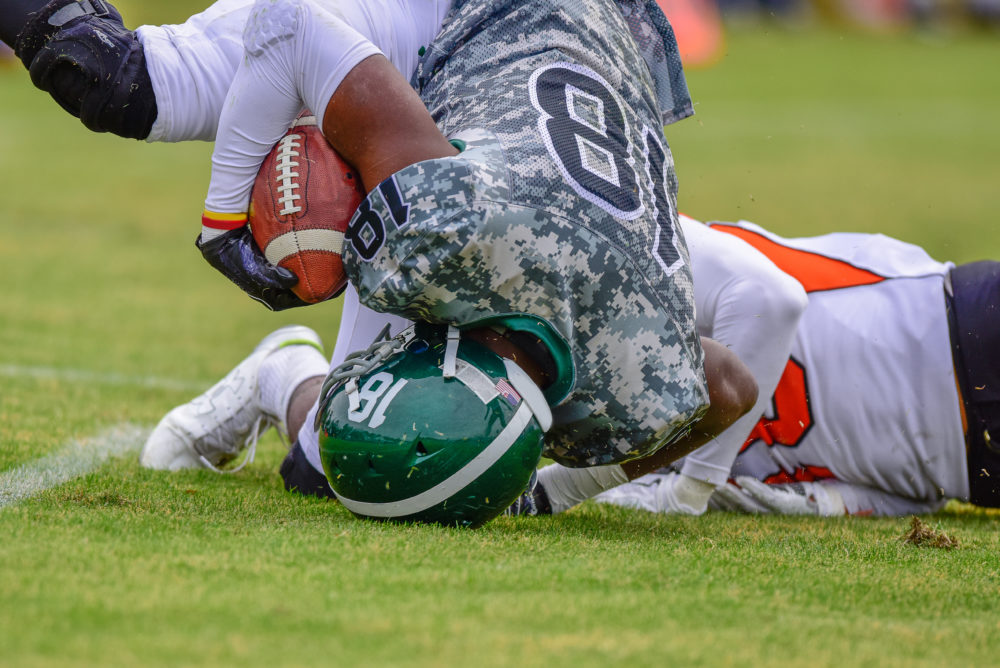
- Recovering from concussion
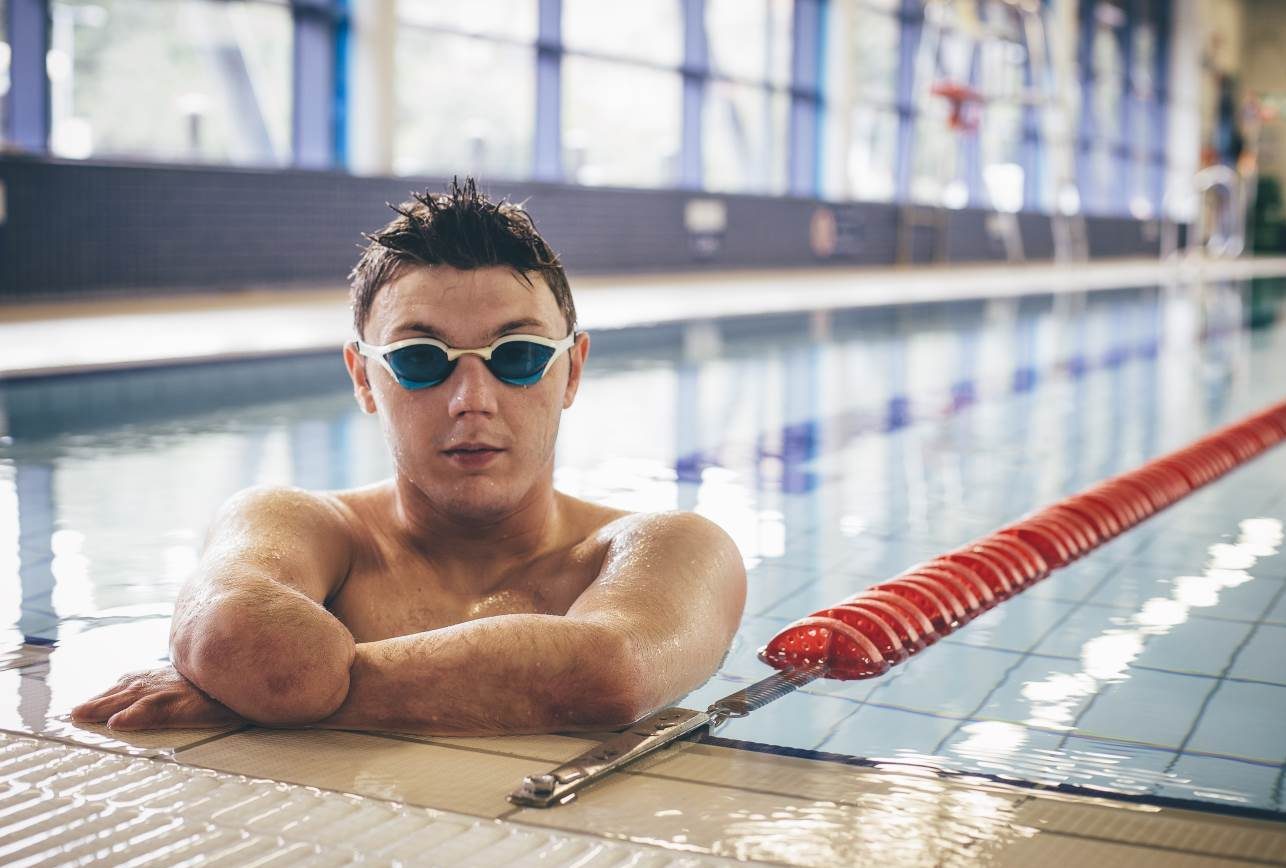
- Managing neurological conditions such as stroke, multiples sclerosis or Parkinson’s
- Experiencing age-related balance or cognitive changes
- Recovering from traumatic or acquired brain injury
A 2024 systematic review of randomized controlled trials involving over 1,500 individuals post-stroke found that dual task training significantly improved walking ability, lower limb motor function, cognitive performance, and activities of daily living compared to single-task interventions.[iii]
For many individuals living with neurological injury, training the nervous system to manage competing demands more efficiently can play an important role in improving safe mobility in everyday life.
Therapeutic Approach to Dual Task Training
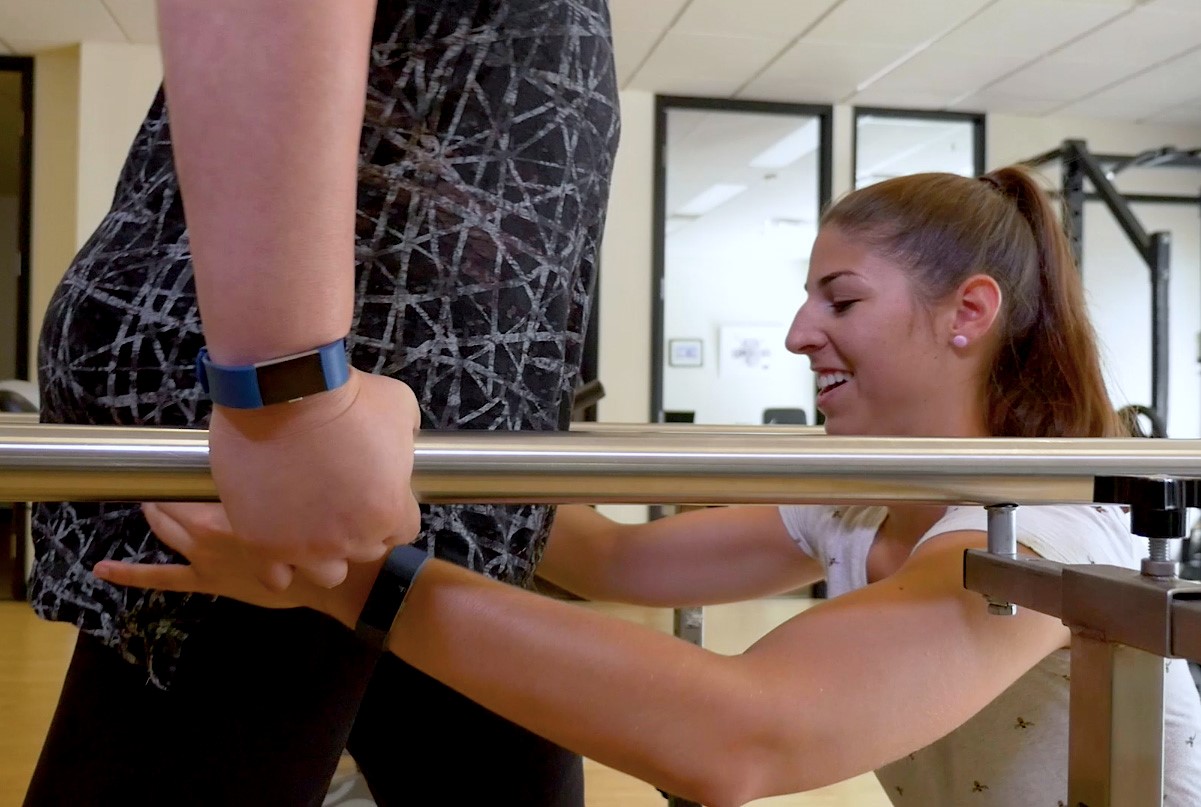
In the clinical setting dual task training is introduced in a structured and progressive manner to optimize safety and learning. Initially, a strong foundation including postural stability and movement quality are established in standing and walking. Once this base is established, a secondary cognitive or motor task is added — for example, counting forward while standing, carrying an object during walking, or responding to simple questions.
As tolerance improves, the complexity is gradually increased by manipulating variables such as task difficulty, environmental demands, speed, directional changes, and divided attention requirements. The goal is not to overwhelm the system, but to slowly challenge attentional capacity while promoting carryover into real-world situations.
Bringing Balance Training Into the Real World
Dual task training bridges the gap between clinical performance and everyday function. It helps ensure that improvements seen in the clinical setting translates into safer mobility at home and in the community.
By incorporating cognitive challenges into physical rehabilitation, physiotherapy can better prepare individuals for the complexity of real-life movement—supporting confidence, independence, and meaningful participation in daily activities.
References
[i]Beurskens R, Bock O. Age-related deficits of dual-task walking: a review. Neural Plast. 2012;2012:131608. doi: 10.1155/2012/131608. Epub 2012 Jul 15. PMID: 22848845; PMCID: PMC3403123.
[ii]Varela-Vásquez LA, Minobes-Molina E, Jerez-Roig J. Dual-task exercises in older adults: A structured review of current literature. J Frailty Sarcopenia Falls. 2020 Jun 1;5(2):31-37. doi: 10.22540/JFSF-05-031. PMID: 32510028; PMCID: PMC7272776.
[iii] Mou, C., & Jiang, Y. (2025). Effect of dual task-based training on motor and cognitive function in stroke patients: a systematic review and meta-analysis of randomized controlled trials. BMC Neurology, 25, 290.
Written by

OUR LOCATIONS
FOLLOW US!
OUR SERVICES






Last Updated on March 11, 2026 by Propel Physiotherapy