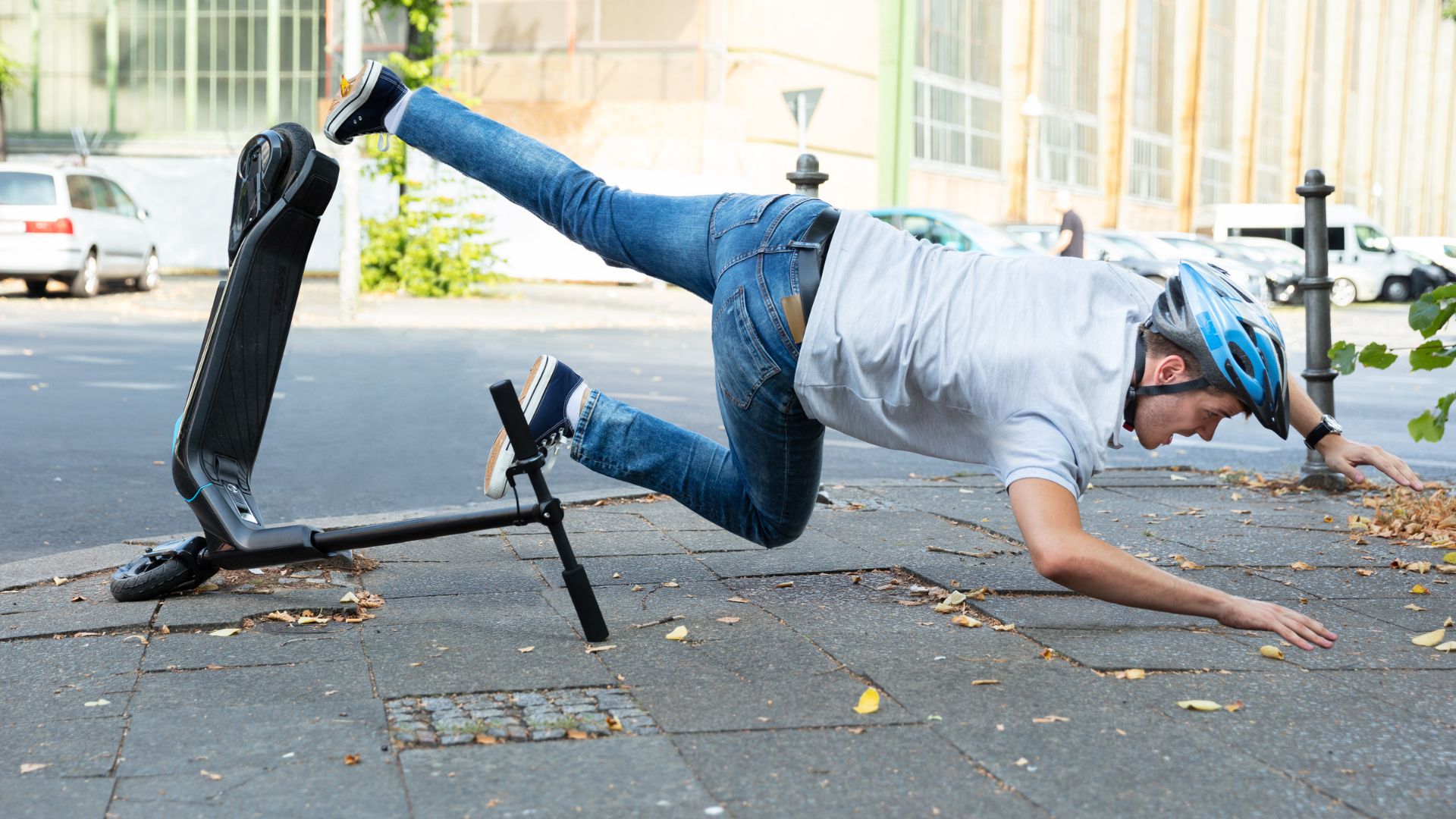
Electric scooters, commonly known as e-scooters, have become an increasingly popular form of transportation. They offer a convenient way to travel short distances, reduce reliance on cars, and navigate busy urban environments. However, despite their convenience, e-scooters can pose significant risks to physical health and safety.
As physiotherapists, we understand how an unexpected fall or collision can affect a person’s mobility, independence, and quality of life. An e-scooter accident can result in injuries ranging from minor bruising and muscle strains to fractures, concussions, and more serious trauma requiring extensive rehabilitation.
Understanding the risks associated with e-scooter use, including the role of speed in injury severity, is an important step toward preventing avoidable injuries and protecting our long-term health.
Table of Contents
- Evidence on the Dangers of E-Scooters
- The Relationship Between Speed and Impact
- Common Injuries Associated with E-Scooter Accidents
- The Role of Physiotherapy in Recovery After an E-Scooter Injury
- Final Thoughts: Prioritize Safety and Protect Your Mobility
Evidence on the Dangers of E-Scooters
Research suggests that e-scooter-related injuries are an important and growing public health concern. A 2024 systematic review and meta-analysis published in Injury examined patterns of electric scooter-related trauma and identified injuries involving the upper limbs and head among the common presentations.[i] Falls were a frequent mechanism of injury, while collisions with motor vehicles could result in more serious trauma.
A widely cited study published in JAMA Network Open by Trivedi and colleagues examined 249 patients presenting to emergency departments following e-scooter-related injuries.[ii] The researchers reported that:
- 2% sustained head injuries
- 7% sustained fractures
- Only 4.4% of injured riders were documented as wearing helmets
These findings demonstrate that e-scooter accidents should not automatically be considered minor incidents. Even a fall during a relatively short journey can result in an injury requiring medical attention, time away from work or school, and a potentially lengthy recovery.
In Canada, the Canadian Institute for Health Information reports that e-scooter hospitalizations were up by 40 percent in the last reported year.[iii] In urban centres, e-scooters are often competing with cars, bikes and other electric modes of transportation on busy city streets.
The Relationship Between Speed and Impact
When an e-scooter rider travels at a higher speed, they have less time to respond to a pedestrian stepping into their path, a vehicle turning unexpectedly, or an obstacle on the road. If a collision occurs, the rider may also experience a greater impact force.
We know from the research on car accidents, the dangers of speeding on the road. It is estimated that 25 percent of motor vehicle fatalities are caused by speed.[iv]
The outcome of a collision depends on several factors, including the direction of impact, the body part affected, the surface involved, the use of protective equipment, and whether another vehicle is involved.
The Evidence
A 2023 study published in JAMA Network Open, titled Speed and Nighttime Usage Restrictions and the Incidence of Shared Electric Scooter Injuries, examined the effects of a safety policy that reduced the maximum speed of shared e-scooters from 25 km/h to 20 km/h and introduced nighttime riding restrictions.[v]
Researchers reported that the overall injury rate decreased from 19 injuries per 100,000 rides during the unrestricted period to 9 injuries per 100,000 rides during the restricted period.
Because the policy introduced both speed reductions and nighttime restrictions, the overall decrease cannot be attributed to speed alone. However, the researchers also examined daytime periods, when nighttime restrictions were not in effect, and found that injury rates decreased following the reduction in maximum speed. This provides useful evidence that lower speed limits may contribute to improved rider safety.
Taken together, the evidence supports speed management as an important component of e-scooter injury prevention. More research is needed to clarify how speed influences specific injury outcomes across different riding environments.
From a practical perspective, slowing down gives riders more time to respond to unexpected hazards and may reduce the energy involved if a collision occurs. Choosing a safe speed for the conditions is an important step in protecting yourself and others.
It is important to note that “since 2020, the SickKids Hospital Trauma Registry has reported a significant increase in the number of serious injuries related to battery-powered mobility devices, especially e-scooters.”[vi] The City of Toronto also reported urgent emergency visits related to e‑scooter falls more than doubled, from 322 to 667 in the last year, with most injuries occurring among people aged 10 to 39, with the highest rates among those aged 10 to 19.[vii]
In Ontario it is illegal for youth aged 15 and under to ride an e-scooter, even in municipalities where e-scooters are allowed for adults.
Common Injuries Associated with E-Scooter Accidents
Head Injuries and Concussions
Head injuries are among the most concerning consequences of e-scooter accidents.[viii] Riders may be thrown forward during sudden braking, lose their balance on an uneven surface, or collide with another road user.
A concussion can cause headaches, dizziness, nausea, fatigue, sensitivity to light or noise, and difficulty concentrating. More serious traumatic brain injuries can have lasting effects on physical function, cognition, emotional well-being, and independence.
Symptoms do not always appear immediately after an accident. Anyone who sustains a head injury should seek appropriate medical advice, particularly if symptoms develop or worsen.
Seek emergency medical attention following a head injury if there is a worsening headache, repeated vomiting, increasing confusion, unusual drowsiness, a seizure, weakness, or difficulty speaking.
Wearing a properly fitted helmet can reduce the risk of serious head injury, although it cannot prevent every concussion or brain injury.
Wrist, Arm, and Shoulder Fractures
When people fall, their natural instinct is often to reach out with their hands to protect themselves. This can transfer substantial force through the wrists, forearms, elbows, and shoulders.
Common injuries include wrist fractures, forearm fractures, shoulder dislocations, and soft-tissue injuries.
These injuries can interfere with everyday activities such as dressing, cooking, driving, working at a computer, and carrying groceries. Depending on the severity, recovery may involve immobilization, surgery, and physiotherapy to restore joint mobility, strength, and functional use of the arm.
The Role of Physiotherapy in Recovery After an E-Scooter Accident
When an e-scooter accident results in an injury, the effects can extend well beyond the initial pain. Reduced mobility, muscle weakness, impaired balance, and difficulty completing everyday activities can affect a person’s independence and quality of life.
The rehabilitation process depends on the type and severity of the injury, the individual’s general health, and their functional goals. Once appropriate medical assessment has taken place, physiotherapy may play an important role in recovery.
A physiotherapist can assess movement and physical function and develop an individualized treatment plan to address specific rehabilitation needs.
Depending on the injury, treatment may include:
- Restoring mobility: Progressive exercises to improve joint movement and flexibility following an injury or period of immobilization.
- Rebuilding strength: Targeted strengthening exercises to address muscle weakness and support a return to daily activities.
- Improving balance and coordination: Exercises to improve stability, postural control, and confidence with movement when appropriate.
- Managing pain and swelling: Strategies to support comfortable movement while injured tissues recover.
- Returning to everyday activities: A gradual progression toward walking, working, exercising, and participating in recreational activities.
For individuals recovering from a concussion, rehabilitation may also address persistent dizziness, balance difficulties, exercise intolerance, and neck-related symptoms when clinically indicated. Concussion rehabilitation should be individualized and guided by appropriate medical assessment.[ix]
The goal of physiotherapy is not simply to reduce pain. It is to help people regain function, restore confidence, and return to the activities that matter to them.
Final Thoughts: Prioritize Safety and Protect Your Mobility
E-scooters offer a convenient way to travel, but their risks should not be underestimated. Research identifies head injuries, upper-limb injuries, and fractures among the important consequences of e-scooter accidents. Emerging evidence also suggests that reducing speed may help lower injury rates.
Taking precautions, wearing a helmet, avoiding impaired riding, and following local regulations can help reduce preventable harm. If an accident does occur, seeking timely medical assessment and following an appropriate rehabilitation plan can support recovery and minimize the longer-term impact on mobility and independence.
As physiotherapists, we encourage everyone to take an informed approach to injury prevention. Protecting your physical health means considering not only the convenience of a mode of transportation, but also the potential consequences of an accident.
References
[i] Spota A, et al. Injury Patterns of Electric-Scooter Related Trauma: A Systematic Review With Proportion Meta-Analysis. Injury. 2024. Read on PubMed
[ii] Trivedi TK, et al. Injuries Associated With Standing Electric Scooter Use. JAMA Network Open. 2019;2(1):e187381. Read the study
[iii] E-scooter injuries are surging across Canada, and more kids are getting hurt
[iv] Canadian Association of Road Safety Professionals
[v] Speed and Nighttime Usage Restrictions and the Incidence of Shared Electric Scooter Injuries. JAMA Network Open. 2023. Read the research article
[vi] Electric Scooters, The City of Toronto
[vii] Electric Scooters, The City of Toronto
[viii] Käckenmester W, Hönning A, Voß HBH, Prahm C, Osterhoff G, Seifert J. E-Scooter-Associated Injury Types and Injury Severity: A Systematic Review and Meta-Analysis. J Clin Med. 2026 Mar 12;15(6):2154. doi: 10.3390/jcm15062154. PMID: 41899078; PMCID: PMC13026923.
[ix] Ontario Living Concussion Guidelines. Management of Prolonged Symptoms. Clinical guidance
Written by

OUR LOCATIONS
FOLLOW US!
OUR SERVICES









Last Updated on October 14, 2026 by Propel Physiotherapy