
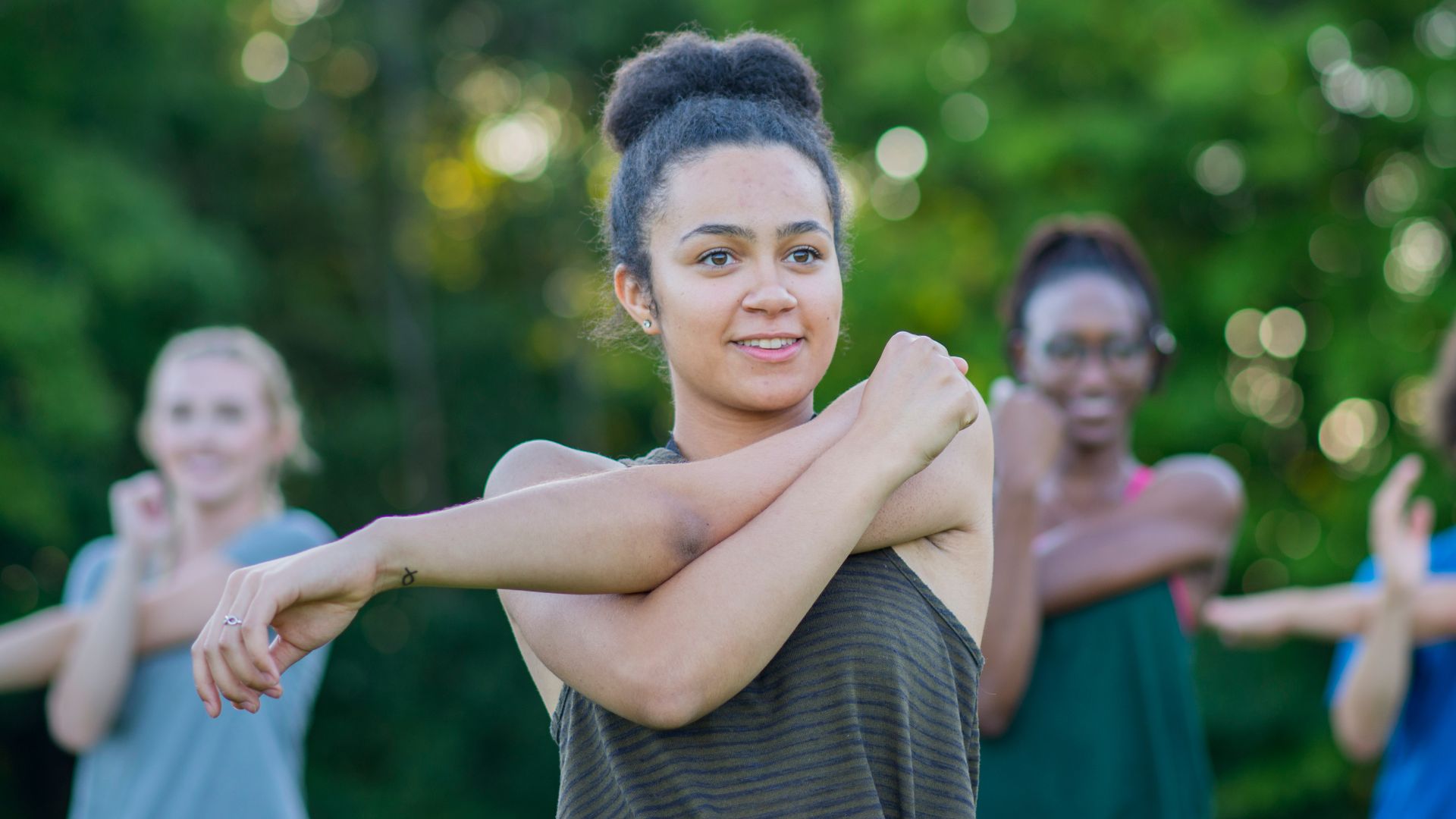
Stretching is one of the most commonly prescribed components of an exercise and physiotherapy program. Whether you are an athlete preparing for sport, recovering from an injury, experiencing stiffness, or trying to maintain your mobility as you age, stretching can play an important role in helping you move comfortably and efficiently.
There are several different types of stretching, including static stretching, dynamic stretching, ballistic stretching, active stretching and proprioceptive neuromuscular facilitation (PNF) stretching. Each technique has different applications and potential therapeutic benefits.
In this blog we will explore how stretching works, the differences between types of stretching and how to choose the right one for any given situation. We’ll also discuss the therapeutic benefits of incorporating stretching into your routine.
Table of Contents
Types of Stretching
Understanding the differences between stretching techniques can help you determine which type may be most appropriate for your needs.
Static Stretching
Static stretching is probably the most familiar form of stretching. It involves moving a muscle or joint into a lengthened position and holding that position for a period of time.
For example, a traditional standing calf stretch involves placing one leg behind you, keeping the heel on the ground and gently shifting your body forward until you feel a stretch through the calf.
Static stretching can be either:
- Passive static stretching, where an external force such as gravity, your hands or another person helps create the stretch. For example, in Thai massage, the practitioner uses their hands to gently aid the passive static stretching.
- Active static stretching, where you use your own muscles to move into and maintain the stretched position.
Static stretching is commonly used to improve flexibility and range of motion. Research indicates that regular static stretching can increase range of motion and may influence both muscle-tendon stiffness and tolerance to the sensation of stretching.
From a physiotherapy perspective, this can be useful when a specific mobility restriction is affecting function. For example, someone with reduced calf flexibility may have difficulty achieving adequate ankle movement during a squat. Similarly, limited hip mobility may affect walking, running or other functional activities.
It is important to consider when prescribing static stretching simply because a muscle “feels tight.” Physiotherapists will consider why the person feels restricted and whether improving flexibility will improve their movement or function.
Long-duration static stretching immediately before activities requiring maximal strength, speed or power can temporarily negatively impact performance.
For this reason, I may recommend static stretching as part of a rehabilitation program, flexibility routine or post-exercise routine rather than using prolonged static stretches immediately before explosive sporting activities.[i]
Dynamic Stretching
Dynamic stretching involves moving a joint and the surrounding muscles through a controlled range of motion. Unlike static stretching, the position is not held for an extended period. Instead, the body moves repeatedly through a controlled range.
Examples include:
- Leg swings
- Arm circles
- Controlled hip rotations
- Walking marches
Dynamic stretching can be particularly useful as part of a warm-up before exercise or sport.
It increases movement through the available range while also allowing the body to rehearse movements that may be required during activity. Research examining stretching and physical performance suggests that dynamic stretching can improve range of motion while supporting readiness for physical activity.
For example, before a hockey game, a player may benefit from controlled leg swings, walking lunges and other dynamic movements that prepare the hips, knees and ankles for skating.
Ballistic Stretching
Ballistic stretching involves repetitive bouncing or rapid movements that take a joint toward or beyond its usual range of motion. For example, repeatedly bouncing while attempting to reach farther toward your toes would be considered a ballistic stretch.
Ballistic stretching has traditionally been used by athletes because certain sports require the ability to move rapidly through large ranges of motion. However, it is a more aggressive stretching technique and requires appropriate strength and neuromuscular control. Ballistic stretching is therefore not necessarily appropriate simply because someone wants to become more flexible.
PNF Stretching
Proprioceptive neuromuscular facilitation (PNF) stretching is a more specialized stretching technique frequently used in physiotherapy and rehabilitation. PNF stretching generally combines a muscle contraction with a subsequent stretch.
This type of stretching involves:
- Moving a muscle into a comfortable stretched position.
- Contracting the muscle.
- Relaxing the muscle.
- Moving into a greater available range of motion.
There are several variations of PNF stretching, and the technique can be adapted depending on the person’s goals and abilities.
Research suggests that PNF stretching can be effective for improving range of motion. A systematic review and meta-analysis examining different stretching techniques found that PNF and static stretching produced substantial improvements in range of motion, with PNF demonstrating particularly strong effects in some comparisons.[ii]
I may use PNF techniques when a specific restriction in mobility is limiting a person’s function. Because the technique can be more complex than a traditional stretch, it is often helpful to learn PNF stretching from a physiotherapist before attempting it independently.
Therapeutic Benefits of Stretching
Stretching can provide several therapeutic benefits when it is appropriately prescribed.
Improved range of motion and mobility can make it easier to perform everyday activities such as walking, reaching, bending, climbing stairs or getting up from a chair.
Reduced stiffness and pain: Stretching may produce changes in the mechanical properties of the muscle-tendon unit, potentially reducing stiffness and allowing greater movement.
Improved movement pattern: In some situations, improving mobility can allow a person to perform a movement with greater efficiency.
Research has consistently demonstrated that stretching can improve joint range of motion. A systematic review and meta-analysis of 77 studies found that stretching programs produced meaningful improvements in range of motion. However, the type, intensity, duration and timing of stretching all need to be considered when developing an exercise program.[iii]
Conclusion
As a physiotherapist, stretching works best when it has a specific purpose and most importantly, stretching should not be viewed in isolation.
A comprehensive physiotherapy program may combine stretching with strengthening, balance training, cardiovascular exercise, mobility work, motor control and functional activities. The goal is not simply to make you more flexible. The goal is to help you move better, participate in the activities that are important to you and improve your overall function.
At Propel Physiotherapy, we take an individualized approach to mobility and rehabilitation. Rather than prescribing a generic stretching routine, we assess your movement, identify the factors contributing to your limitations and develop an exercise program based on your specific goals.
If you are experiencing stiffness, reduced mobility or difficulty with movement, physiotherapy may help you determine whether stretching is appropriate—and which techniques are right for you.
References
[i] Static Stretching and Performance, National Strength and Conditioning Association
[ii] Konrad A, Alizadeh S, Daneshjoo A, Anvar SH, Graham A, Zahiri A, Goudini R, Edwards C, Scharf C, Behm DG. Chronic effects of stretching on range of motion with consideration of potential moderating variables: A systematic review with meta-analysis. J Sport Health Sci. 2024 Mar;13(2):186-194. doi: 10.1016/j.jshs.2023.06.002. Epub 2023 Jun 8. PMID: 37301370; PMCID: PMC10980866.
[iii] Behm DG, Blazevich AJ, Kay AD, McHugh M. Acute effects of muscle stretching on physical performance, range of motion, and injury incidence in healthy active individuals: a systematic review. Appl Physiol Nutr Metab. 2016 Jan;41(1):1-11. doi: 10.1139/apnm-2015-0235. Epub 2015 Dec 8. PMID: 26642915.
Written by

OUR LOCATIONS
FOLLOW US!
OUR SERVICES







Last Updated on September 16, 2026 by Propel Physiotherapy