

Running is a great and rewarding way to move your body. It builds endurance, clears the mind, and improves cardiovascular health. The warm spring weather is often a time when new runners start training and when experienced runners increase their mileage and training. But when training volume increases too quickly or proper recovery is overlooked, overuse injuries can occur. One of the most common overuse injuries in runners is a stress fracture.
In this article, we will look at what constitutes a stress fracture and the factors that often lead to stress fractures in runners. We also discuss common signs and symptoms to pay attention to over time, as well as how physiotherapy plays an important role in prevention and treatment of stress fractures in runners.
Table of Contents
- What is a stress fracture?
- Causes of stress fractures
- Common signs and symptoms of stress fractures
- Physiotherapy management of running stress fractures
- Conclusion
What is a Stress Fracture?
A stress fracture is a small crack or area of bone irritation caused by repetitive loading over time. Unlike an acute fracture from a fall or traumatic injury, stress fractures develop gradually when the body is unable to keep up with the demands being placed on it.
Bones are constantly remodeling and adapting to stress. Running places healthy stress on the skeleton, which is normally beneficial. However, when training intensity, mileage, or impact increases faster than the body can recover, the bone may begin to weaken instead of strengthen.
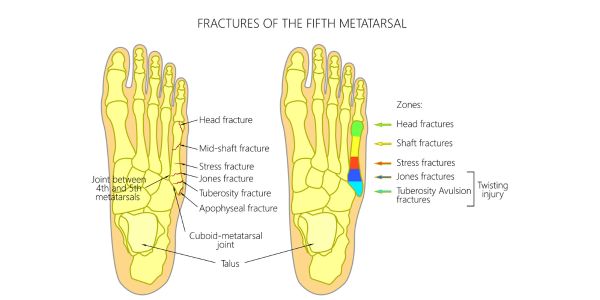
The most common sites for stress fractures to occur are in the tibia (shin bone), metatarsals and tarsals (foot bones), and femur (thigh bone).[i]
Women runners are more than 2 times likely to develop stress fractures compared to their male counterparts.[ii]
Causes of Stress Fractures
Stress fractures are often multifactorial in cause with a combination of extrinsic and intrinsic factors.[iii]
Extrinsic factors include:
- Nutritional deficiencies
- Eating disorders
- Female athlete triad (a syndrome comprising three interrelated conditions: low energy availability, menstrual dysfunction, and low bone mineral density)
- Volume and frequency of training (new and increased amount of running without proper rest or recovery)
- Quality of footwear
- Environmental factors (Such as, running surface)
Intrinsic factors include:
- Previous history of stress fractures
- Female
- High or low body mass index
- Bone mineral density
Common Signs and Symptoms of Stress Fractures
One of the hallmark signs of a stress fracture is pain that gradually worsens with activity.
Runners often describe:
- A deep, localized ache
- Pain that starts during runs and lingers afterward
- Tenderness over one specific spot
- Pain that becomes worse with hopping or impact
- Swelling in some cases
- Pain that improves with rest but returns quickly with activity
A key difference between muscle soreness and a stress fracture is that stress fracture pain tends to become increasingly specific and persistent with time.
Physiotherapy Intervention for Running Stress Fractures
Physiotherapy plays a key role in the various stages of injury management including:
- Pain management – This can include various modalities such as ice, heat, ultrasound, shockwave therapy and acupuncture.
- Education on rest and recovery – Learning about the importance of rest is critical to allow for bone healing to take place.
- Maintaining strength and mobility during recovery – During recovery physiotherapists provide guidance on cross training options such as aquatherapy and biking. Additionally, physiotherapists can help prescribe a safe strength training program to ensure muscle strength is maintained even when someone is unable to run or train in their usual way.
- Correcting movement patterns and biomechanical issues – An extensive physiotherapy assessment that includes looking at walking and running patterns, a muscular strength assessment and postural analysis is key at correcting any running abnormalities that may be contributing to the injury.
- Guiding a safe return-to-running progression – Physiotherapists help guide a safe return to running by providing guidance on proper warm up and stretching, gradual increasing volume and load when running, and reassessing proper gait form and pattern.
Conclusion
Recovery from a stress fracture requires patience, but it can also be an opportunity to rebuild stronger habits and improve overall resilience as a runner. With the right combination of healing, strength training, gradual progression, and proper recovery, most runners are able to return to the activities they enjoy safely and confidently. Physiotherapists play a key role in the management and prevention of running stress fractures. Paying attention to early warning signs and addressing pain sooner rather than later can make a significant difference in both recovery time and long-term running health.
References
[i] Hadjispyrou S, Hadjimichael AC, Kaspiris A, Leptos P, Georgoulis JD. Treatment and Rehabilitation Approaches for Stress Fractures in Long-Distance Runners: A Literature Review. Cureus. 2023 Nov 25;15(11):e49397. doi: 10.7759/cureus.49397. PMID: 38146574; PMCID: PMC10749698.
[ii] Johnston TE, Jakavick AE, Mancuso CA, McGee KC, Wei L, Wright ML, Close J, Shimada A, Leiby BE. Risk Factors for Stress Fractures in Female Runners: Results of a Survey. Int J Sports Phys Ther. 2021 Feb 2;16(1):72-86. doi: 10.26603/001c.18806. PMID: 33604137; PMCID: PMC7872445.
Written by

OUR LOCATIONS
FOLLOW US!
OUR SERVICES









Last Updated on May 21, 2026 by Propel Physiotherapy