When people start physiotherapy, they often have a clear goal in mind—reducing pain, regaining strength, walking again, or simply getting back to activities that matter. Yet, one of the biggest challenges in rehabilitation isn’t the treatment itself—it’s maintaining the motivation and consistency to do what’s needed outside the clinic.
Many clients leave their appointments feeling inspired, but life gets busy, fatigue sets in, or frustration takes over. Home exercises are missed, daily habits don’t change, and progress slows. It’s a familiar story for both clients and physiotherapists. A story we are all too familiar with.
Fortunately, behaviour change science offers us tools to bridge this gap. Here we take a look at a practical model called the COM-B framework, which stands for Capability, Opportunity, Motivation—Behaviour, in the context of physiotherapy. The COM-B framework helps us understand what drives clients’ adherence to treatment plans and how clinicians can design interventions that make change possible.
Table of Contents:
- What is the COM-B Model?
- Capability: Building the Skills and Confidence to Act
- Case Example: Rebuilding Hand Function After Stroke
- Opportunity: Shaping the Environment for Success
- Case Example: Overcoming Barriers After Spinal Cord Injury
- Motivation: Creating the Drive to Keep Going
- Case Example: Managing Chronic Knee Pain from Osteoarthritis
- Why COM-B Matters for Physiotherapy Practice
What is the COM-B Model?
The COM-B model suggests that for any behaviour (B) to occur, three components must be present:[i]
- Capability – The person must have the physical and psychological ability to perform the behaviour.
- Opportunity – The environment must provide the physical and social conditions to make the behaviour possible.
- Motivation – The person must want to perform the behaviour, whether consciously or subconsciously.
Each of these areas can be targeted through specific strategies—such as education, training, modeling, persuasion, and environmental restructuring—to help clients successfully integrate physiotherapy practices into daily life. To break down the COM-B framework further, the following explains each component of the COM-B and how it can play a role in the context of a successful physiotherapy program.
Capability: Building the Skills and Confidence to Act
Capability is about whether someone has the knowledge, skills, and physical ability to do what’s asked of them.
For example, a client recovering from a stroke may understand the importance of performing repetitive hand exercises to improve function—but might lack the fine motor control to do them independently. Similarly, a client with osteoarthritis may have the motivation to exercise but not know which movements are safe or how to perform them correctly.
As physiotherapists, we can increase capability through:
- Training: Breaking down complex movements into manageable steps. Teaching skills progressively helps clients build mastery and reduces frustration.
- Building Self-Efficacy: According to Bassett-Gunter’s research, self‐efficacy (or belief in one’s ability) is a key psychosocial predictor of physical activity behaviour.[ii] By giving clients early wins (e.g., full completion of a 5-minute routine) you boost this belief, which aids ongoing adherence.
- Enablement: Providing adaptive equipment or strategies. For instance, using elastic bands with built-up handles or voice-guided exercise videos for clients with limited dexterity or vision helps them overcome barriers.
Case Example: Rebuilding Hand Function After Stroke
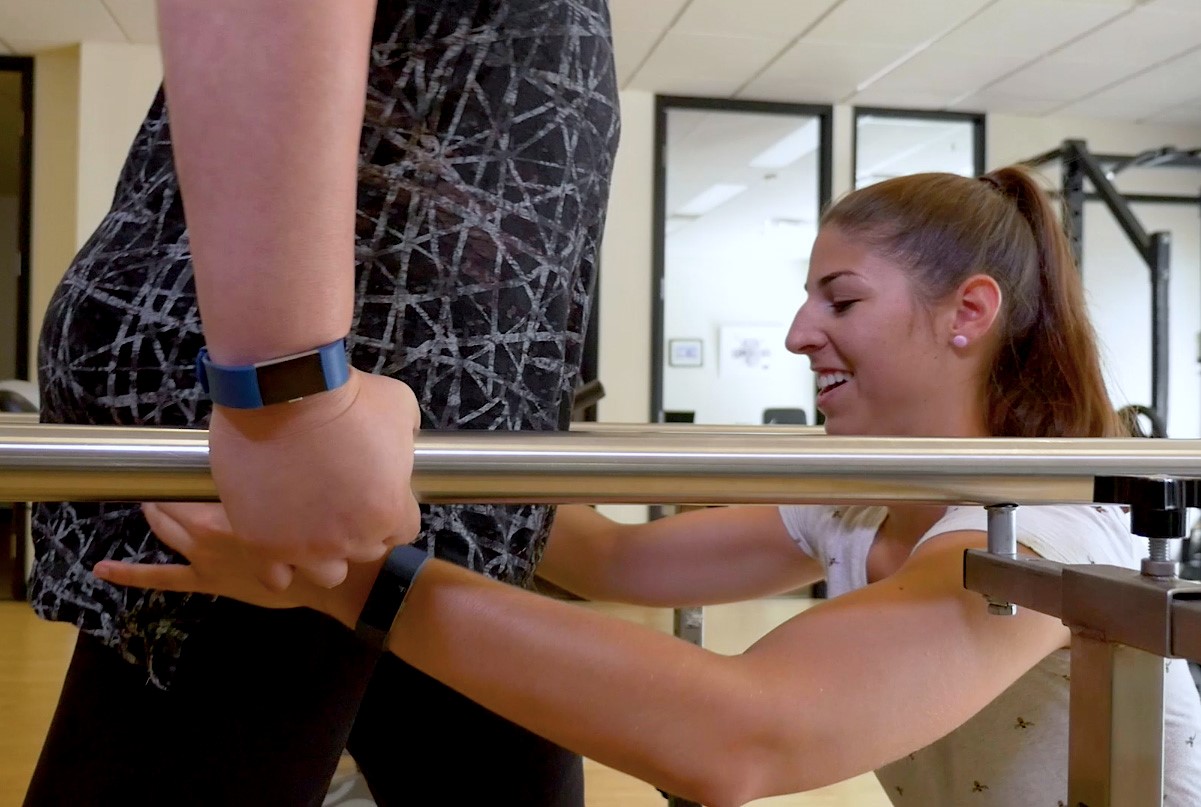
Maria, a 58-year-old woman recovering from a right-sided stroke, struggled to complete her home exercises because her left hand fatigues quickly. Instead of repeating the same instructions, her physiotherapist introduced task-specific training—simple daily activities like folding towels and gripping cups- and other tactile or visual cues to ensure she could do these activities with less barriers.
These small adjustments improved her sense of competence and confidence. By focusing on capability, her therapist turned a challenging task into something achievable and meaningful.
Opportunity: Shaping the Environment for Success
Even when clients have the skills and knowledge, they may struggle if their environment doesn’t support their efforts. The Opportunity component of COM-B includes both physical and social environments.
Physical Opportunity
This refers to access, equipment, and resources.
- For a client with a spinal cord injury, completing exercises may require modified equipment, adaptive grips, or access to a space free of barriers.
- A client recovering from hip surgery may need clear instructions on how to safely move around their home, including strategies to manage stairs or transfer from bed to chair.
Environmental restructuring—changing the surroundings to make the desired behaviour easier—is a powerful intervention. Examples include:
- Keeping resistance bands visible in the living room as a visual cue.
- Scheduling short exercise breaks into a calendar reminder.
- Setting up grab bars or non-slip mats to increase confidence and safety during mobility training.
Social Opportunity
Support from others can make or break adherence.
- Family or caregivers can encourage participation and offer practical help.
- Group-based programs—like circuit classes for people with osteoarthritis—can boost motivation through shared experience and accountability.
- Clinicians can use modeling, showcasing other successful clients who have followed similar plans.
Case Example: Overcoming Barriers After Spinal Cord Injury
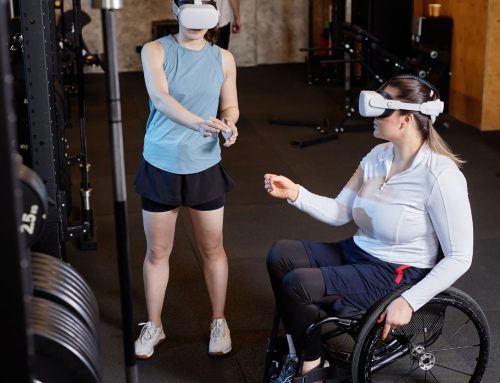
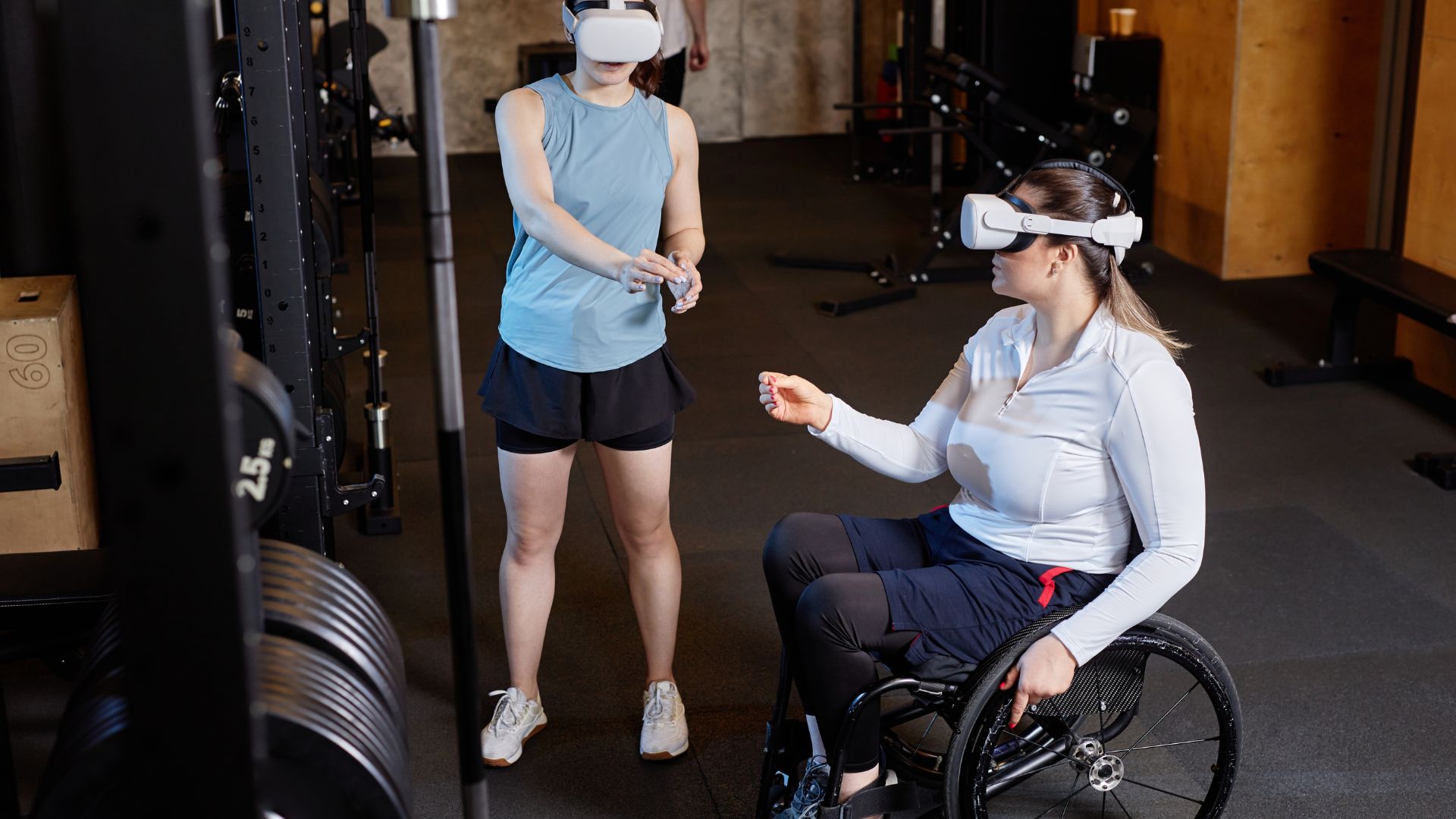
David, a 35-year-old man with a T12 spinal cord injury, was committed to his upper body strengthening program but found it hard to stay consistent at home. His therapist worked with his family to rearrange his living space—placing a resistance pulley system at wheelchair height and creating a visible schedule on the wall.
The therapist also introduced him to a local adaptive fitness group, giving him both the physical and social opportunity to sustain his exercise routine.
Motivation: Creating the Drive to Keep Going
Even with the right skills and environment, change won’t last without motivation—the internal process that directs our decisions and habits.
COM-B distinguishes between two types of motivation:
- Reflective motivation – conscious decisions, intentions, and plans (“I know this will help me get to my ultimate goals”).
- Automatic motivation – emotions, habits, and impulses (“I feel proud when I finish my exercises, I like the feeling of accomplishing this difficult task”).
Physiotherapists can use several approaches to strengthen motivation:
- Persuasion: Using encouragement and evidence-based messaging to reinforce progress.
- Incentives and rewards: Celebrating small wins (e.g., reaching a new walking distance or reducing pain levels).
- Modeling: Sharing success stories of others who’ve made similar progress.
Case Example: Managing Chronic Knee Pain from Osteoarthritis
Sonia, a 62-year-old teacher with chronic knee pain, struggled to follow her strengthening program because it felt tedious and painful at first. Her physiotherapist reframed the exercises by linking them to her personal goals—staying active for her grandkids and returning to gardening. Reframing movement/ exercises to the end goal can be instrumental in encouraging exercises amongst people living with chronic pain.[iii]
The therapist also tracked progress visually using a simple chart, showing her improvement in repetitions and pain reduction over time. This positive reinforcement turned her reflective motivation (“I should exercise”) into automatic motivation (“I want to exercise”).
Behaviour change isn’t linear—it’s a cycle. Success often requires adjusting strategies over time as clients’ capability, opportunity, and motivation evolve.
Why COM-B Matters for Physiotherapy Practice
The beauty of the COM-B framework lies in its flexibility—it works for both clinicians and clients. For physiotherapists, it provides a structured, evidence-based approach to guide conversations, set realistic goals, and tailor interventions.
Rather than assuming non-adherence reflects a lack of willpower, COM-B helps us uncover the true barriers—whether they’re physical, emotional, social, or environmental—and design supports that empower clients to take ownership of their recovery.
In doing so, we move beyond the role of “exercise prescribers” to become partners in behaviour change.
Key Takeaways
- Behaviour change is central to successful rehabilitation. Without consistent follow-through, even the best physiotherapy plans lose effectiveness.
- The COM-B model offers a simple yet comprehensive way to understand and influence adherence.
- By focusing on Capability, Opportunity, and Motivation, physiotherapists can design personalized strategies that make home exercise and guideline adherence achievable for every client—regardless of their physical or neurological condition.
- Real success happens not just in the clinic, but in the daily choices clients make—and our role is to make those choices easier, more rewarding, and more meaningful.
References
[i] Michie, S., van Stralen, M. M., & West, R. (2011). The behaviour change wheel: A new method for characterising and designing behaviour change interventions. Implementation Science, 6(42).
[ii] Bassett-Gunter, R. L., Angevaare, K., Tomasone, J., Leo, J., Varughese, B., Langvee, J., & Martin Ginis, K. A. (2019). A systematic scoping review: Resources targeting the training and education of health and recreation practitioners to support physical activity among people with physical disabilities. Disability and Health Journal, 12(4), 542-550.
[iii] Nicolson, P. J. A., et al. (2018). Physical activity and exercise adherence in chronic musculoskeletal pain: A systematic review. Clinical Journal of Pain, 34(9), 852–871.
Written by